The Anatomy of the 78 Arcana
The standard tarot deck comprises seventy-eight cards split into two principal tiers. The Major Arcana contains twenty-two numbered allegorical scenes beginning with The Fool (0) and culminating in The World (XXI). These cards embody overarching archetypes, spiritual karmic phases, and pivotal life milestones that transform your trajectory. When a Major Arcana card turns face up in a layout, it demands serious contemplation because external forces or profound internal transformations are at play.
The remaining fifty-six cards form the Minor Arcana, detailing the practical day-to-day realities of human experience. Divided across four distinct elemental suits—Wands (Fire, creativity, ambition), Cups (Water, emotions, relationships), Swords (Air, intellect, conflict), and Pentacles (Earth, finances, physical vitality)—they portray transient moods, routine interactions, and solvable dilemmas. Numbered cards from Ace through Ten indicate the progression of circumstances, while the four Court figures illustrate behavioral temperaments.
Do not rush to memorize rigid textbook definitions for every card. Observe colors, posture, and elemental symbols first to form an authentic psychic dialogue with your deck.
Preparing the Space and Casting First Spreads
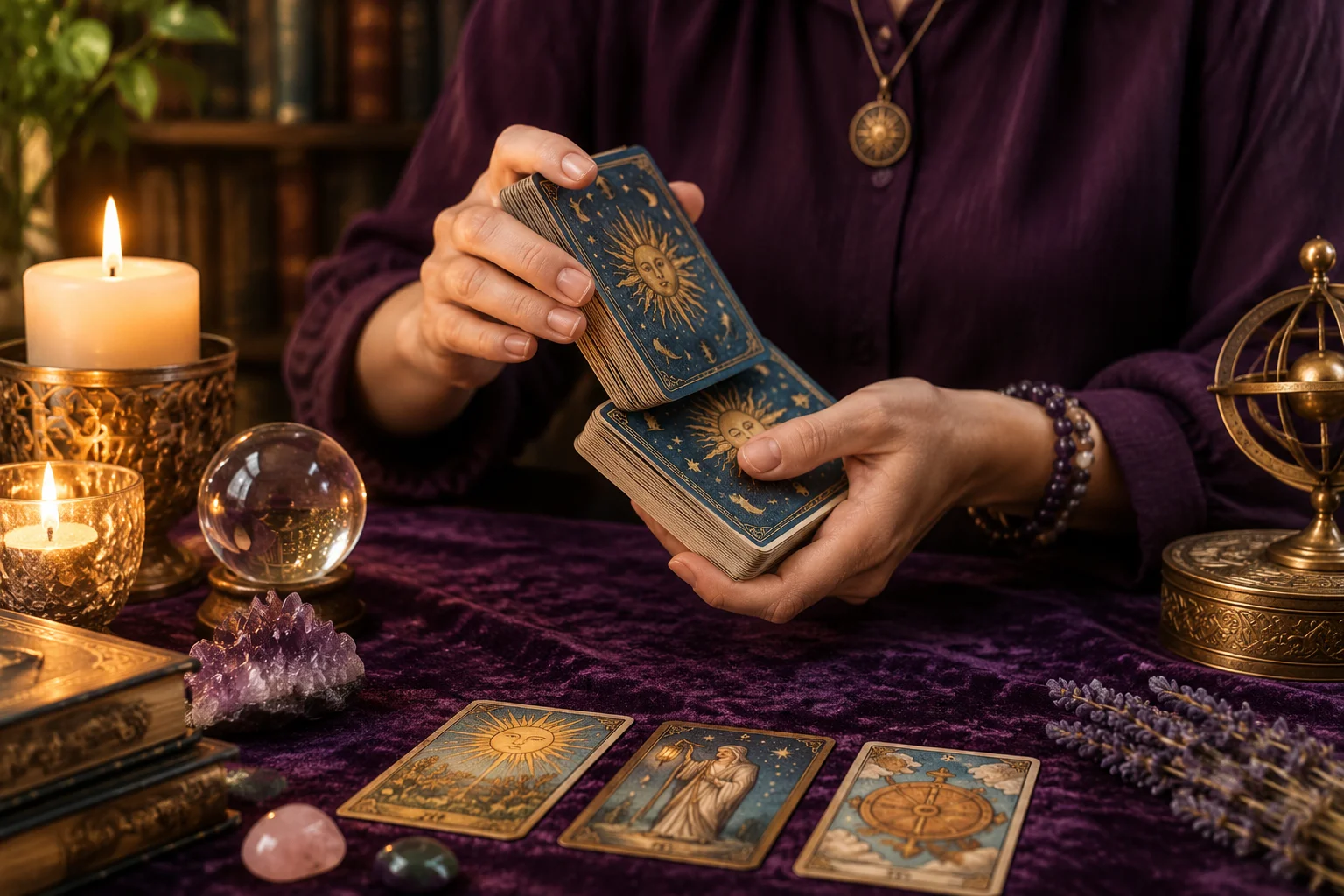
Before drawing cards, cleanse your physical table and clear mental clutter. Lay down a clean dark cloth to guard card edges against grit while shielding the reading from residual energetic noise. Breathe deeply through your diaphragm, center your awareness on a specific inquiry, and hold the deck gently in both hands. Physical contact transfers personal warmth and presence into the cardstock.
Shuffling is not merely a mechanical randomizer; it is an active meditation. Whether choosing an overhand shuffle, gentle riffle, or swirling the cards in circular currents across the cloth, focus on the question at hand. When you feel a sense of stillness, cut the deck into three stacks using your non-dominant hand and recombine them into one cohesive pile before laying out the cards.
Essential Sequence
- 1 Ground your energy with three slow breaths, formulating an open-ended question rather than a yes-or-no inquiry.
- 2 Shuffle deliberately across your velvet altar cloth until you intuitively recognize a natural stopping point.
- 3 Draw a simple three-card triad representing Past Root, Present State, and Probable Outcome to interpret the linear narrative.
Weaving the Narrative and Avoiding Anxiety Traps
The most common hurdle for new readers is viewing cards as isolated data points. True cartomancy relies on reading the relationship between cards. Notice where figures in adjacent cards are gazing, which elemental suit dominates the spread, and whether the primary colors are vibrant or somber. If three Swords appear together, mental friction or intellectual analysis dominates the situation, regardless of whether a Pentacle sits at the end.
Beware the temptation to redraw repeatedly when a card looks menacing. Challenging archetypes like Death, The Tower, or the Three of Swords represent inevitable transitions, liberation from illusion, or emotional release. Running from difficult cards breeds unnecessary anxiety; embracing their transformative medicine cultivates authentic wisdom. Maintain a dedicated tarot journal where you document daily one-card pulls, noting how their energetic resonance materialized throughout the day.